"This work is unlike any other, in its range of rich, conjuring imagery and its dexterity, its smart voice. Carroll-Hackett doesn’t spare us—but doesn’t save us—she draws a blueprint of power and class with her unflinching pivot: matter-of-fact and tender." —Jan Beatty
I hate grocery shopping. But today while grudging my way through it, I ran into a retired colleague whom I adore and haven’t seen in a while. He made me laugh, like always. And I laughed through the rest of the shopping.
Make art about something good arising from something you usually dread.
18 May 2017
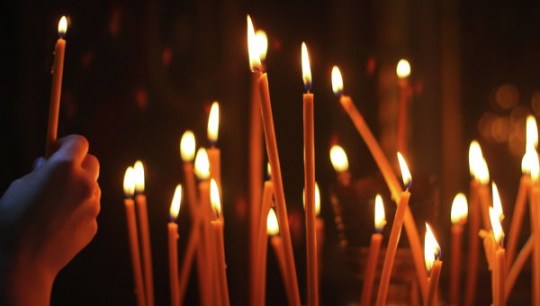
Dreamt I was lighting candles, thousands and thousands of candles, as far as I could see.
Psychiatrist Viktor Frankl’s memoir has riveted generations of readers with its descriptions of life in Nazi death camps and its lessons for spiritual survival. Between 1942 and 1945 Frankl labored in four different camps, including Auschwitz, while his parents, brother, and pregnant wife perished. Based on his own experience and the experiences of others he treated later in his practice, Frankl argues that we cannot avoid suffering but we can choose how to cope with it, find meaning in it, and move forward with renewed purpose. Frankl’s theory—known as logotherapy, from the Greek word logos (“meaning“)—holds that our primary drive in life is not pleasure, as Freud maintained, but the discovery and pursuit of what we personally find meaningful.
At the time of Frankl’s death in 1997, Man’s Search for Meaning had sold more than 10 million copies in twenty-four languages. A 1991 reader survey for the Library of Congress that asked readers to name a “book that made a difference in your life” found Man’s Search for Meaning among the ten most influential books in America.
Beacon Press, the original English-language publisher of Man’s Search for Meaning, is issuing this new paperback edition with a new Foreword, biographical Afterword, jacket, price, and classroom materials to reach new generations of readers.
Buy Frankl’s Man’s Search for Meaning (and support an indie press) here:
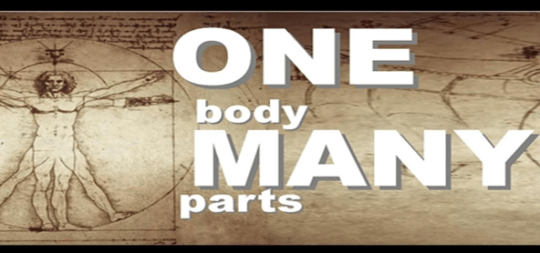
12 There is one body, but it has many parts. But all its many parts make up one body…13 We were all baptized by one Holy Spirit. And so we are formed into one body. It didn’t matter whether we were Jews or Gentiles, slaves or free people. We were all given the same Spirit to drink. 14 So the body is not made up of just one part. It has many parts.
15 Suppose the foot says, “I am not a hand. So I don’t belong to the body.” By saying this, it cannot stop being part of the body. 16 And suppose the ear says, “I am not an eye. So I don’t belong to the body.” By saying this, it cannot stop being part of the body. 17 If the whole body were an eye, how could it hear? If the whole body were an ear, how could it smell? 18 God has placed each part in the body just as he wanted it to be. 19 If all the parts were the same, how could there be a body?20 As it is, there are many parts. But there is only one body.
21 The eye can’t say to the hand, “I don’t need you!” The head can’t say to the feet, “I don’t need you!” 22 In fact, it is just the opposite. The parts of the body that seem to be weaker are the ones we can’t do without. 23 The parts that we think are less important we treat with special honor.–1 Corinthians 12:12-23 New International Reader’s Version (NIRV)
Make art about Connectedness, the inescapability of how we are all connected.
The moon does not fight. It attacks no one. It does not worry. It does not try to crush others. It keeps to its course, but by its very nature, it gently influences. What other body could pull an entire ocean from shore to shore? The moon is faithful to its nature and its power is never diminished. -Ming-Dao Deng
I grew up in Hurricane Alley, eastern North Carolina, so the preparation for these big storms is something I learned early. Hurricane Matthew has ripped through Haiti, and is on his way to the US East Coast. All my provisions are laid in, flashlights and emergency equipment in place and ready, and I’ve battened down as much as I can. But sometimes Mama Nature’s just too big and unpredictable for any kind of preparation.
Make art about preparing the best you can.
10/5/2016
Thinking a lot today about all the ways people find their way to, or demonstrate faith. Took me immediately to one of my top three favorite songs, The Mountain, by Dave Carter and Tracy Grammer.
Excerpted Lyrics by Dave Carter
Some build temples and some find altars, some come in tall hats and robes spun fine. Some in rags, some in gemstone halters, some push the pegs back in line.
I see the mountain, the mountain comes to me, I see the mountain and that is all I see.
Make art about temples or altars or shrines, faith in some unexpected way.
10/6/2016
Road Angel Andrea at Walmart today told me about her grandmama teaching her to sew, first by making curtains, long straight hems, she said, over and over again, summer curtains, winter curtains with their heavy lining. She said her grandmama was patient but tough, making her tear out crooked stitches, and try again til she got it right. “I learned to take my time,” she said. “I learned to take my time, look ahead of the foot, and how a pair of curtains can make all the difference in a room.”
Make art about curtains. Or about what you learned from an elder.
“The falling leaves, all over the forest, are protecting the roots of my plants. Only look at what is to be seen, and you will have garden enough, without deepening the soil in your yard. We have only to elevate our view a little to see the whole forest as a garden.” ~Thoreau
Make art about ‘garden enough.’
10/2/2016
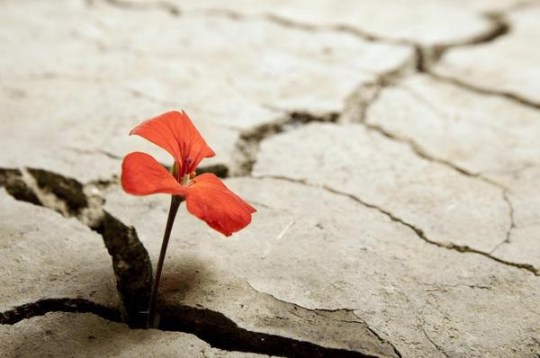
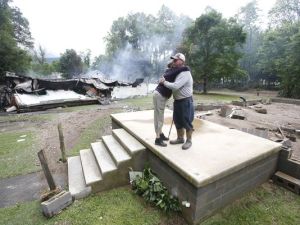
Driving back from WV, I stopped for gas, and Road Angel Louise tells me her story of trying to recover from the recent flooding, what it’s like to lose so much. “Just go from here, I reckon,” she said.
Make art about rebounding from tragedy, about how we ‘just go from here.’
10/3/2016
Dreamt someone I love brought me apples, Honey Crisp and Red Delicious, Granny Smith and Winesap, even a couple of Arkansas Black. He sliced one with his sharp knife, and smiling, said, Here you go, Missy. A taste of what’s to come.
Make art about the taste of autumn. Or about what’s to come.
The most recent book from one of my always favorite poets, Pattiann Rogers.
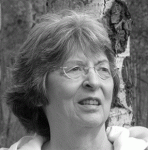
Ms. Rogershas published eleven books of poetry; two book-length essay collections, The Dream of the Marsh Wrenand The Grand Array; and A Covenant of Seasons, poems and monotypes, in collaboration with Joellyn Duesberry. She is the recipient of two NEA grants, a Guggenheim Fellowship, and a Lannan Literary Award for poetry. She lives in Colorado.
“I believe Pattiann Rogers walks the world at night when we are sleeping. Her poems are translations of our dreaming life—what we know to be true but fail to remember. We read her words, sentence by sentence, image by image, and return to all that is beautiful, mysterious, and erotic.” —Terry Tempest Williams
“Pattiann Rogers is a visionary of reality, perceiving the material world with such intensity of response that impulse, intention, meaning, interconnections beyond the skin of appearance are revealed. Her language, unmarred by clichés, springs up out of a sense of how various and endlessly amazing are the forms of life and the human ability to notice them.” —Denise Levertov
“How the densely detailed, thickly textured, imaged stanzas of Pattiann Rogers result in so much light-as-air wonderment is surely one of the greater questions—one of the greater magics—of contemporary poetry. But however it happens, we must be thankful—for both the science text and the psalter of her work, for both the physical abundance and for the spirit flimmering over it.” —Albert Goldbarth






 Ms. Rogers
 Mary Carroll-Hackett: Poetry and Prose
Recent Comments