"This work is unlike any other, in its range of rich, conjuring imagery and its dexterity, its smart voice. Carroll-Hackett doesn’t spare us—but doesn’t save us—she draws a blueprint of power and class with her unflinching pivot: matter-of-fact and tender." —Jan Beatty
I hate grocery shopping. But today while grudging my way through it, I ran into a retired colleague whom I adore and haven’t seen in a while. He made me laugh, like always. And I laughed through the rest of the shopping.
Make art about something good arising from something you usually dread.
18 May 2017
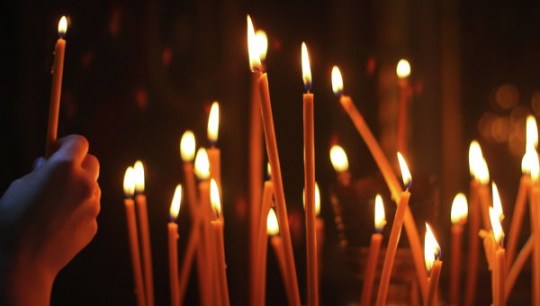
Dreamt I was lighting candles, thousands and thousands of candles, as far as I could see.
Ann Tweedy‘s first full length book, The Body’s Alphabet, was published by Headmistress Press in 2016, and it is currently a finalist for both a Lambda Literary Award and a Golden Crown Literary Society Award. Ann’s poetry has been published in Rattle, Clackamas Literary Review, Berkeley Poetry Review, Wisconsin Review, and many other places. She is also the author of two chapbooks—White Out (Green Fuse Press 2013) and Beleaguered Oases (tcCreative Press 2010)—and she has been nominated for a Pushcart Prize and a Best of the Net Award. In addition to writing poetry, she has served as a law professor, most recently at the former Hamline University School of Law in St. Paul, and is a leading scholar on both tribal civil jurisdiction and bisexuality and the law. She currently serves as in-house counsel for the Muckleshoot Tribe in Washington State. Ann grew up in Southeastern Massachusetts and graduated from Bryn Mawr College and the University of California, Berkeley School of Law. She is an M.F.A. candidate at Hamline University.
“This collection of poems adheres to the bodies of mothers and daughters, lovers and partners, childhood and children. It reminds us how close and distant we can be, at all times, to each other, to nature, to living, and to death.”
–Trish Hopkinson, Literary Mama
“Ann Tweedy’s collection The Body’s Alphabet is a book of in-betweens – in-between homes, in-between loves, in-between sexualities. It is a book about motherhood and memory, and the space we keep for our childhood long after we have grown up around it. Though Tweedy begins The Body’s Alphabet with the lines ‘I tread through / the world mindful that upsets / follow unguarded movement’ (1), over the course of the collection she finds strength in those quiet and delicate moments, and in doing so steps out from her own carefully crafted betweenness to affirm her presence in the work.”
–Rebecca Valley, Drizzle Review
“Home is the structure you build when nowhere else will have you,” writes Ann Tweedy in this gutsy, no-nonsense collection of poems built on a precarious and often tender journey through homes no longer available to return to. The result is neither sadness nor nostalgia; it is hard, clean narrative of self-preservation and survival, fitted with unexpected joy. I feel such kinship with these poems, their testament to the strength and determination of women and men who struggle to build life anew, and to find home and happiness in a world of travail. What a blessed space this book is: a home for the wayward soul. —D. A. Powell, American Poet
Ann Tweedy’s first book is a brave and honest examination of liminality. In delicate lyrics she confesses to trespass, asking readers to question the boundaries between acts and identity, sexuality and family. The Body’s Alphabetdocuments the poet’s courage, living openly as a bisexual feminist. Although childhood logic taught her that “home is the structure / you build when nowhere else will have you,” these beautiful poems knit and nest safe haven for a life spent gathering freedom. —Carol Guess, author of Doll Studies: Forensics
Jon Tribble‘s first collection of poems, Natural State, was published by Glass Lyre Press in 2016. His second collection of poems, And There Is Many a Good Thing, will be published by Salmon Poetry in 2017. His poems have appeared in print journals and anthologies, including Ploughshares, Poetry, Crazyhorse, Quarterly West, and The Jazz Poetry Anthology, and online at The Account, Prime Number, and storySouth. He teaches at Southern Illinois University Carbondale, where, aside from being an excellent person and amazing literary citizen, he is the managing editor of Crab Orchard Review and the series editor of the Crab Orchard Series in Poetry published by SIU Press.
One of the poems in Jon Tribble’s Natural State observes that “the finest / moment of our lives may not matter at all.” That’s a devastating truth, but Tribble’s poems about growing up in Arkansas make every moment he renders matter, and matter deeply. Natural State may be Tribble’s first collection, but it’s as polished, mature, and wise as most poets’ fourth or fifth, and it not only matters, its publication is one of contemporary poetry’s finest moments. – David Jauss, author of You Are Not Here and Glossolalia: New & Selected Stories
from Citizen, VI [On the train the woman standing]
Claudia Rankine
On the train the woman standing makes you understand there are no seats available. And, in fact, there is one. Is the woman getting off at the next stop? No, she would rather stand all the way to Union Station.
The space next to the man is the pause in a conversation you are suddenly rushing to fill. You step quickly over the woman’s fear, a fear she shares. You let her have it.
The man doesn’t acknowledge you as you sit down because the man knows more about the unoccupied seat than you do. For him, you imagine, it is more like breath than wonder; he has had to think about it so much you wouldn’t call it thought.
When another passenger leaves his seat and the standing woman sits, you glance over at the man. He is gazing out the window into what looks like darkness.
You sit next to the man on the train, bus, in the plane, waiting room, anywhere he could be forsaken. You put your body there in proximity to, adjacent to, alongside, within.
You don’t speak unless you are spoken to and your body speaks to the space you fill and you keep trying to fill it except the space belongs to the body of the man next to you, not to you.
Where he goes the space follows him. If the man left his seat before Union Station you would simply be a person in a seat on the train. You would cease to struggle against the unoccupied seat when where why the space won’t lose its meaning.
You imagine if the man spoke to you he would say, it’s okay, I’m okay, you don’t need to sit here. You don’t need to sit and you sit and look past him into the darkness the train is moving through. A tunnel.
All the while the darkness allows you to look at him. Does he feel you looking at him? You suspect so. What does suspicion mean? What does suspicion do?
The soft gray-green of your cotton coat touches the sleeve of him. You are shoulder to shoulder though standing you could feel shadowed. You sit to repair whom who? You erase that thought. And it might be too late for that.
It might forever be too late or too early. The train moves too fast for your eyes to adjust to anything beyond the man, the window, the tiled tunnel, its slick darkness. Occasionally, a white light flickers by like a displaced sound.
From across the aisle tracks room harbor world a woman asks a man in the rows ahead if he would mind switching seats. She wishes to sit with her daughter or son. You hear but you don’t hear. You can’t see.
It’s then the man next to you turns to you. And as if from inside your own head you agree that if anyone asks you to move, you’ll tell them we are traveling as a family.
Michael Meyerhofer is a contemporary poet and fantasy author who believes those two genres genuinely can get along. To illustrate this, his debut fantasy novel, Wytchfire (Book I in the Dragonkin Trilogy), was published by Red Adept Publishing, and went on to win the Whirling Prize and a Readers Choice nomination from Big Al’s Books and Pals. The sequels, Knightswrath and Kingsteel, are out now. He is also the author of the forthcoming Godsfall Trilogy. Michael’s fourth poetry book, What To Do If You’re Buried Alive, was published by Split Lip Press. His third, Damnatio Memoriae (lit. “damned memory”), won the Brick Road Poetry Book Contest. His previous books are Leaving Iowa (winner of the Liam Rector First Book Award) and Blue Collar Eulogies (Steel Toe Books, finalist for the Grub Street Book Prize).
He has also published five poetry chapbooks: Pure Elysium (winner of the Palettes and Quills Chapbook Contest), The Clay-Shaper’s Husband (winner of the Codhill Press Chapbook Award), Real Courage (winner of the Terminus Magazine and Jeanne Duval Editions Poetry Chapbook Prize), The Right Madness of Beggars (winner of the Uccelli Press 3rd Annual Chapbook Competition), and Cardboard Urn (winner of the Copperdome Chapbook Contest).
Michael has won the Marjorie J. Wilson Best Poem Contest, the Laureate Prize for Poetry, the James Wright Poetry Award, and the Annie Finch Prize for Poetry. His work has appeared in Ploughshares, North American Review, Arts & Letters, River Styx, Quick Fiction, Asimov’s Science Fiction Magazine, and other journals.
He received his BA from the University of Iowa and his MFA from Southern Illinois University Carbondale. An avid weightlifter, medieval weapons collector, and unabashed history nerd, he currently lives, teaches, and inhabits various coffee shops around Fresno, CA.
“With a compassionate eye, and his trademark sense of humor that hooks readers from the very first page, Meyerhofer sends us back to our earliest memories, and shows us a world of heartbreak and wonder.” -Mary Biddinger, author of A Sunny Place with Adequate Water
“…Meyerhofer sings in a pure American tenor, his voice haunted by late night diners, small town heartbreak, and somehow, out there in the desolate vastness of the heartland, a flash of humor and a sweet glimmer of hope.” -George Bilgere, author of Imperial
“While never flinching from confronting the irredeemable damage we do to one another, these urgent and necessary poems remind us ‘that if we focus on what hurts, / face it wholly, it dissolves / like a light from a burnt-out bulb, / a curtain gone up in flames.” -Jon Tribble, author of Natural State
c. 1300, “container,” from Old French vessel “container, receptacle, barrel; ship” (12c., Modern French vaisseau) from Late Latin vascellum “small vase or urn,” also “a ship,” alteration of Latin vasculum, diminutive of vas “vessel.” Sense of “ship, boat” is found in English from early 14c. “The association between hollow utensils and boats appears in all languages” [Weekley]. Meaning “canal or duct of the body” (especially for carrying blood) is attested from late 14c.
Make art about a vessel.
18 April 2017
Make art about something relentless, about relentless emotion.
19 April 2017
Awake until four in the morning last night, me and the deer, and a lone owl in the oak outside the window.
Make art about a conversations in the night, about how the night talks to you.
“He fought because he actually felt safer fighting than running.” – Richard Adams
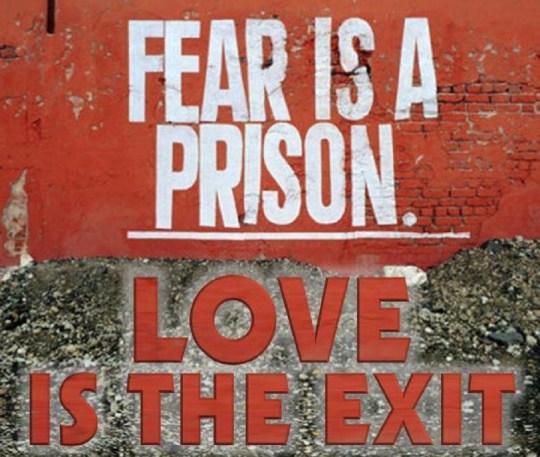
It’s hard to empathize with the combative life attitude until we look below the surface and see it’s a protective mechanism, meant to combat the anxiety produced from a world perceived as hostile. The need to fight is really just a signal of deep fear.
Make art about the fear driving combative people, or about understanding and forgiving them.
   The lover’s footprint in the sand
   the ten-year-old kid’s bare feet
in the mud picking chili for rich growers,
not those seeking cultural or ethnic roots,
but those whose roots
have been exposed, hacked, dug up and burned
			and in those roots
			do animals burrow for warmth;
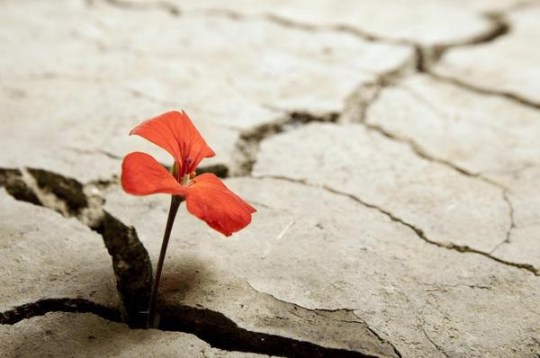
what is broken is blessed,
	not the knowledge and empty-shelled wisdom
	paraphrased from textbooks,
		not the mimicking nor plaques of distinction
		nor the ribbons and medals
but after the privileged carriage has passed
	the breeze blows traces of wheel ruts away
	and on the dust will again be the people’s broken
							footprints.
What is broken God blesses,
	not the perfectly brick-on-brick prison
	but the shattered wall
	that announces freedom to the world,
proclaims the irascible spirit of the human
rebelling against lies, against betrayal,
against taking what is not deserved;
	the human complaint is what God blesses,
	our impoverished dirt roads filled with cripples,
what is broken is baptized,
	the irreverent disbeliever,
	the addict’s arm seamed with needle marks
		is a thread line of a blanket
	frayed and bare from keeping the man warm.
We are all broken ornaments,
		glinting in our worn-out work gloves,
		foreclosed homes, ruined marriages,
from which shimmer our lives in their deepest truths,
blood from the wound,
				broken ornaments—
when we lost our perfection and honored our imperfect sentiments, we were
blessed.
Broken are the ghettos, barrios, trailer parks where gangs duel to death,
yet through the wretchedness a woman of sixty comes riding her rusty bicycle,
			we embrace
			we bury in our hearts,
broken ornaments, accused, hunted, finding solace and refuge
		we work, we worry, we love
		but always with compassion
		reflecting our blessings—
			in our brokenness
			thrives life, thrives light, thrives
				the essence of our strength,
					each of us a warm fragment,
					broken off from the greater
					ornament of the unseen,
					then rejoined as dust,
					to all this is.

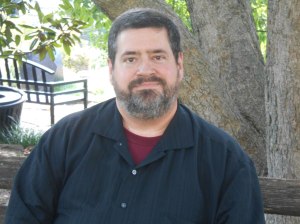 Jon Tribble‘s first collection of poems, Natural State, was published by Glass Lyre Press in 2016. His second collection of poems, And There Is Many a Good Thing, will be published by Salmon Poetry in 2017. His poems have appeared in print journals and anthologies, including Ploughshares, Poetry, Crazyhorse, Quarterly West, and The Jazz Poetry Anthology, and online at The Account, Prime Number, and storySouth. He teaches at Southern Illinois University Carbondale, where, aside from being an excellent person and amazing literary citizen, he is the managing editor of Crab Orchard Review and the series editor of the Crab Orchard Series in Poetry published by SIU Press.
 Michael Meyerhofer is a contemporary poet and fantasy author who believes those two genres genuinely can get along. To illustrate this, his debut fantasy novel, Wytchfire (Book I in the Dragonkin Trilogy), was published by Red Adept Publishing, and went on to win the Whirling Prize and a Readers Choice nomination from Big Al’s Books and Pals. The sequels, Knightswrath and Kingsteel, are out now. He is also the author of the forthcoming Godsfall Trilogy.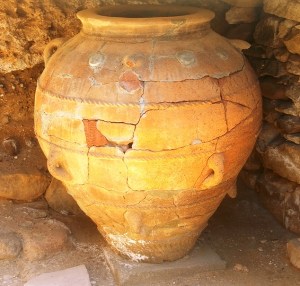



 Mary Carroll-Hackett: Poetry and Prose
Recent Comments