"This work is unlike any other, in its range of rich, conjuring imagery and its dexterity, its smart voice. Carroll-Hackett doesn’t spare us—but doesn’t save us—she draws a blueprint of power and class with her unflinching pivot: matter-of-fact and tender." —Jan Beatty
I grew up in Hurricane Alley, eastern North Carolina, so the preparation for these big storms is something I learned early. Hurricane Matthew has ripped through Haiti, and is on his way to the US East Coast. All my provisions are laid in, flashlights and emergency equipment in place and ready, and I’ve battened down as much as I can. But sometimes Mama Nature’s just too big and unpredictable for any kind of preparation.
Make art about preparing the best you can.
10/5/2016
Thinking a lot today about all the ways people find their way to, or demonstrate faith. Took me immediately to one of my top three favorite songs, The Mountain, by Dave Carter and Tracy Grammer.
Excerpted Lyrics by Dave Carter
Some build temples and some find altars, some come in tall hats and robes spun fine. Some in rags, some in gemstone halters, some push the pegs back in line.
I see the mountain, the mountain comes to me, I see the mountain and that is all I see.
Make art about temples or altars or shrines, faith in some unexpected way.
10/6/2016
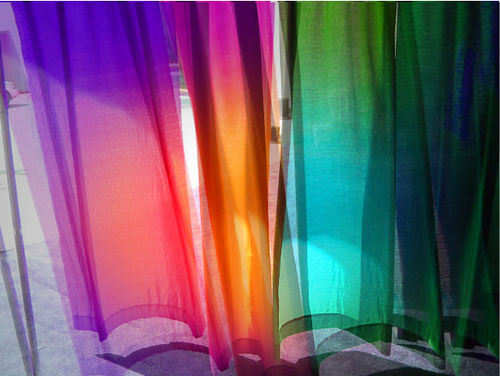
Road Angel Andrea at Walmart today told me about her grandmama teaching her to sew, first by making curtains, long straight hems, she said, over and over again, summer curtains, winter curtains with their heavy lining. She said her grandmama was patient but tough, making her tear out crooked stitches, and try again til she got it right. “I learned to take my time,” she said. “I learned to take my time, look ahead of the foot, and how a pair of curtains can make all the difference in a room.”
Make art about curtains. Or about what you learned from an elder.
This week’s Must Read is Patricia Jabbeh Wesley, author of When the Wanderers Come Home( 2016),Where the Road Turns(2010), The River Is Rising(2007), Crab Orchard Series in Poetry–winner Becoming Ebony(2003), and Before the Palm Could Bloom: Poems of Africa(1998),
Patricia was born in Monrovia, Liberia, and raised there and in her father’s home village of Tugbakeh, where she learned to speak Grebo in addition to English, the national language. In 1991, Wesley immigrated with her family to southern Michigan to escape the Liberian civil war. She earned a BA at the University of Liberia, an MS at Indiana University, and a PhD at Western Michigan University.Her poems have also been featured in former US Poet Laureate Ted Kooser’s syndicated newspaper column, “American Life in Poetry.”
Vulnerable in their combination of grief and levity, Wesley’s poems deal with family, community, and war. “What I try to do in my poetry is to show that the artist does not exist in isolation from his surroundings,” Wesley has stated in interviews.
Patricia teaches as an Associate Professor at Penn State University.
This week, meet Karenne Wood, a poet and linguistic anthropologist who grew up in the suburbs of Washington, DC. She earned an MFA at George Mason University and a PhD in anthropology at the University of Virginia, where she was a Ford Fellow. Wood is the author of the poetry collection Markings on Earth(2001), which won a Diane Decorah Award for Poetry from the Native Writers’ Circle of the Americas. Her work was included in the anthologies Sister Nations: Native American Women Writers in Community (2002) and The People Who Stayed: Southeastern Indian Writing After Removal (2010). In her poems, she often explores themes of identity, cultural practice, and language within portraits of historical and contemporary Virginia Indians.
An enrolled member of the Monacan Indian Nation, Wood serves on the Monacan Tribal Council and directs the Virginia Indian Programs at the Virginia Center for the Humanities. She has served as the repatriation director for the Association on American Indian Affairs and as a researcher for the National Museum of the American Indian. Wood curated Beyond Jamestown: Virginia Indians Past and Present, exhibited at the Virginia Museum of Natural History. She has served as chair of the Virginia Council on Indians and as a member of the National Congress of American Indians’ Repatriation Commission.
This week meet the fabulous Karen Craigo. Karen is the author of the poetry collection No More Milk(Sundress Publications, 2016), as well as the forthcoming collection Passing Through Humansville(ELJ Publications, 2017). Her poetry and essays appear in numerous journals, and she is the author of two chapbooks,Someone Could Build Something Here(Winged City, 2013) and Stone for an Eye(Kent State/Wick, 2004).
Despite the seeming refusal implied by No More Milk, there’s vast generosity in these poems, a sense of holiness in even the smallest of gestures. Holy, but not numinous: these are embodied prayers, “in praise of what’s left/ and all the hands it has known,” the kind that makes you “bow beneath the burden of words.” There is a profound personal morality at stake for this poet who loves the people and things of this earth in all their itchy-butt blessedness, “the slugs/ as much as the lilacs,” who manages to sing like “the bird/ that has made us rise…/…yesterday’s anger/ reduced to syllables in the air.” Alleluia.
—Heidi Czerwiec, author of Self-Portrait as Bettie Page and Sweet/Crude: A Bakken Boom Cycle
I was in West Virginia this past weekend for a house concert style poetry reading in Scott Depot WV, hosted by the kind and generous Mary Imo Stike and John Stike 🙂 The mountains as always were beautiful, my hosts warm and lovely, and the audience, around twenty-two people in attendance–were spirited and funny and smart and a very eclectic talented bunch themselves, in sooo many ways! We were also blessed with the beautiful musical talents of The Wild Hares! Awesome, funny, Doug, Jim, and Mike rocked the tunes before and after the reading 🙂
The conversation after the reading was just amazing! Talk of–yes, poetry :-)–but also of physics and spirituality, language and issues of class bias, tradition and preservation, the search for truth in so many ways beyond academia. I learned–and laughed :-)–with every conversation. I felt blessed to be in their presence. And twenty more copies of my crazy books out into the world! 🙂 Thank you, Mary and John, and thank you, West Virginia, for an incredible reading experience!
I do believe these house readings, the revival of the salon, are crucial to the future of poetry. So many readers and thinkers and lovers of words outside the insulated walls of academia! I’m grateful for that, and I can’t wait to meet more of them! ❤
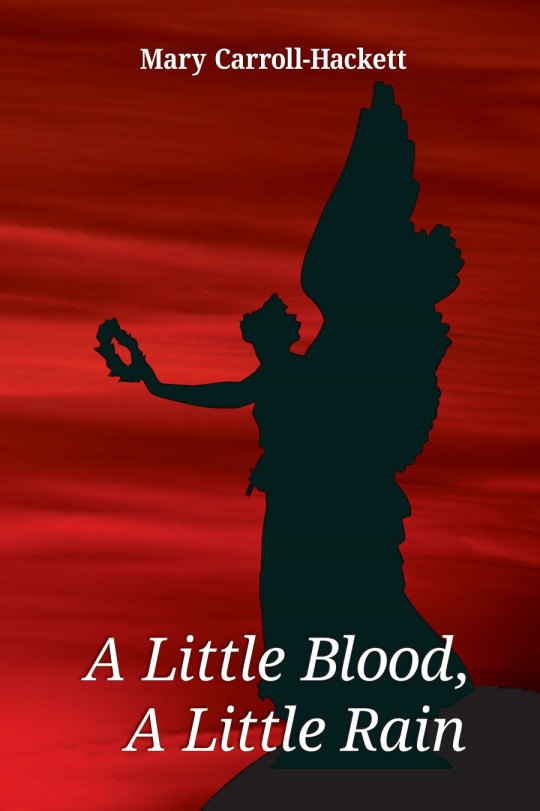
Grateful to some generous lovely people for hosting readings for my crazy lil prose poems 🙂 Upcoming readings this fall, from A Little Blood, A Little Rain (FutureCycle Press 2016), Trailer Park Oracle (Kelsay Books 2016), and The Night I Heard Everything (FutureCycle Press 2015).
August 13 – Scott Depot, WV, Hosted by Mary Imo and John Stike
October 1 – Heritage Village, Calhoun County Park, Grantsville, WV, Hosted by Lisa Hayes Minney
October 19 – Longwood University Writers Reading Series, Farmville VA
October 26 – Waterbean Reading Series, Waterbean Coffee, NorthCross Shopping Center 9705 Sam Furr Rd., Ste A, Huntersville, NC
December 5 – Readings on Roslyn, Winston Salem, NC, Hosted by Kathryn Milam
Grateful especially to these generous hosts, and to the publishers who made these books possible ❤
Diane Kistner, Robert S. King, and all the great folks at FutureCycle Press
Readings scheduled so far for this fall in West Virginia (this coming weekend! Thank you Love you Mary Imo Stike!), two in October: one here at Longwood, and one in the Charlotte area (Thank you Love youJonathan Kevin Rice!), and then in December in WInston Salem (Thank you Love you Kathryn Milam!)
And BIG GRATITUDE to the fabulous generous editors who made these crazy lil books possible–Karen Kelsay Davies with Kelsay Books and Diane Kistner and Robert S. King with FutureCycle Press



 This week’s Must Read is
  This week, meet Karenne Wood, a poet and linguistic anthropologist who grew up in the suburbs of Washington, DC. She earned an MFA at George Mason University and a PhD in anthropology at the University of Virginia, where she was a Ford Fellow. Wood is the author of the poetry collection
  This week meet the fabulous


 This week meet
  Mary Carroll-Hackett: Poetry and Prose
Recent Comments